
Valorizzazione del Friariello
Valorizzazione del Friariello
Before sowing Friariello Napoletano, soil preparation operations must be carried out: a shallow working is chosen (maximum 40-50 cm), considering the poor depth of the root system. This work has the purpose of turning the soil, thus allowing the most underground parts to be aerated and also preventing water stagnation, which could cause root rot and other fungal diseases. This is followed by possible fertilization and burial of organic substance (it is not particularly demanding of nitrogen and phosphorus), one or two harrowings and a final leveling of the surface.
Then the sowing takes place, which can be broadcast or in rows. The quantity of seed used per hectare ranges from 5 to 8 kg.
Friariello Napoletano is not a particularly water-demanding crop: irrigation is carried out for early ecotypes considering the climatic conditions (low rainfall), while for the ecotypes with an intermediate crop cycle irrigation is reduced and almost non-existent. Late ecotypes, on the other hand, require irrigation only if there is not enough rainfall in the spring.
The cultivation of Friariello Napoletano is among the most sustainable, from an environmental point of view, among Brassicas, both for the short duration of the crop cycle and for the low needs that the crop requires in terms of energy inputs and chemical contributions.
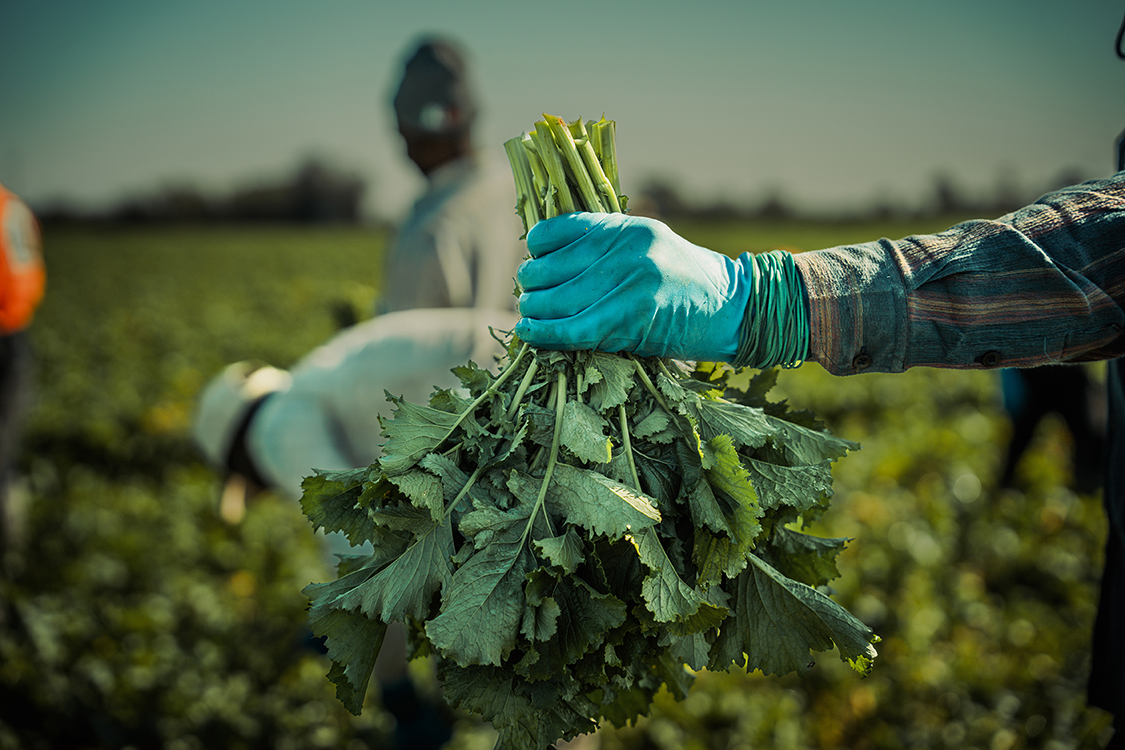
The harvest of Friariello Napoletano is done by hand and occurs when the inflorescences of the plant are fully developed and the flowers have not yet bloomed. The most common harvesting method involves cutting at a height of about 35 cm from the apical part (a height that varies depending on whether the ecotype is early, medium or late) and forming bunches that collect the inflorescences with the stem up to below the insertion of the shoots and lateral inflorescences, with all the leaves attached. This method, however, requires a subsequent cleaning operation by the person cooking the product, so the edible part of this product is reduced to about 50%. Production per hectare varies from 10 to 20 tons. Another harvesting method instead involves the direct cutting of the florets, including only the inflorescences and the terminal leaves (more tender), thus making the product 100% edible